High and Lifted Up
Isaiah saw the Lord sitting on a throne, high and lifted up, and the train of His robe filled the temple. See Isaiah 6:1.
Prophets, Faith and Miracles • Exhibit 6 of 8
In the year King Uzziah died, Isaiah saw the Lord high and lifted up. The train of His robe filled the temple, seraphim cried out concerning His holiness, the thresholds shook, and the house was filled with smoke. Confronted by the holiness of God, Isaiah became painfully aware of his own uncleanness, was cleansed by a coal from the altar, and then answered God's call.
Featured Museum Artwork
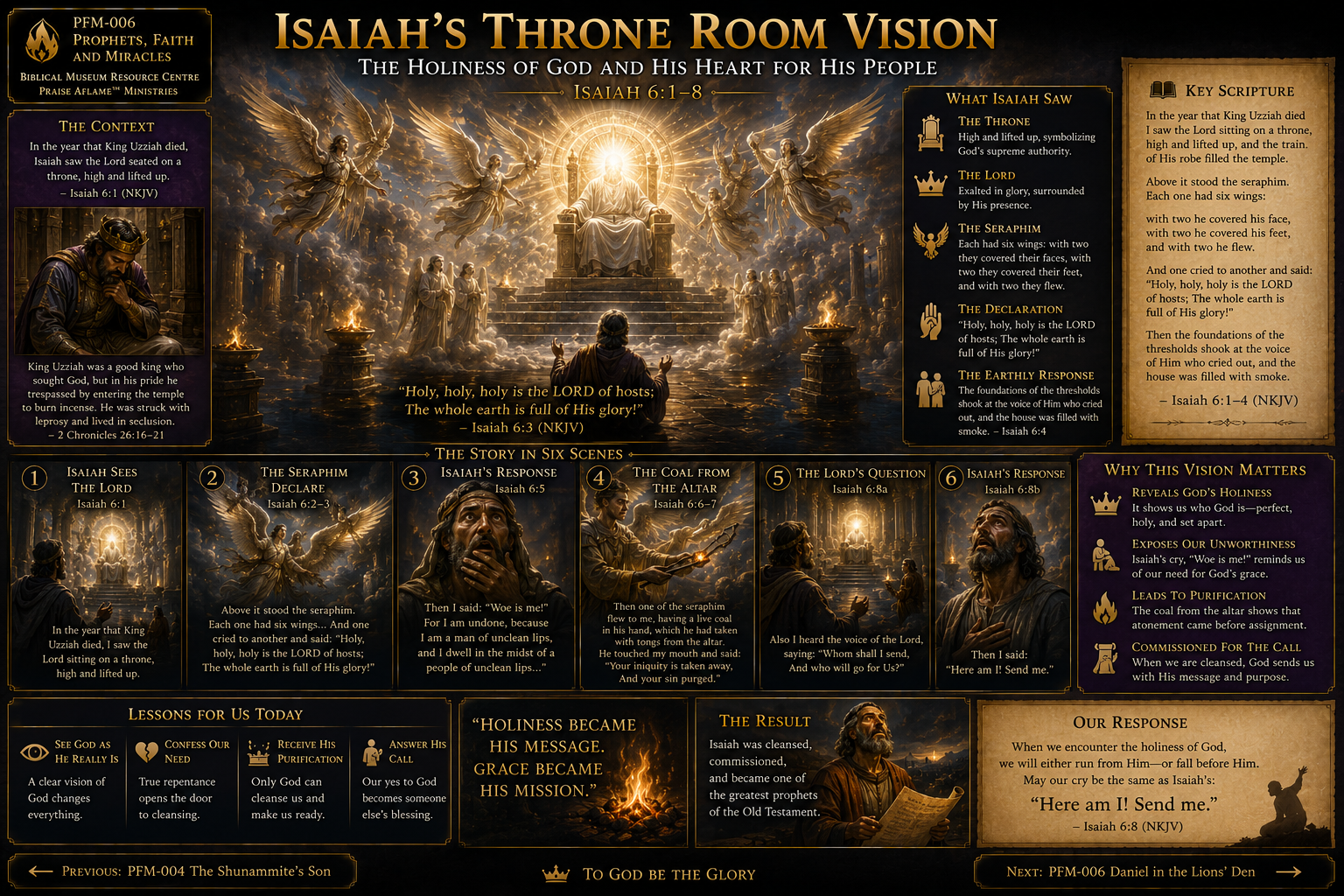
Isaiah 6 does not begin with Isaiah's mission. It begins with a revelation of who God is. Only after Isaiah sees the Lord's holiness does he understand his own condition, receive cleansing, and become ready to answer the call.
Isaiah saw the Lord sitting on a throne, high and lifted up, and the train of His robe filled the temple. See Isaiah 6:1.
Above the throne stood seraphim. Each had six wings: with two they covered their faces, with two they covered their feet, and with two they flew. See Isaiah 6:2.
The seraphim cried to one another that the LORD of hosts is holy and that the whole earth is full of His glory. See Isaiah 6:3.
The posts of the door were shaken by the voice of the one who cried out, and the house was filled with smoke. See Isaiah 6:4.
The vision begins with God's majesty and authority, not with Isaiah himself. See Isaiah 6:1.
The heavenly beings proclaim the holiness of the LORD and the fullness of His glory. See Isaiah 6:2–3.
Isaiah cries, “Woe is me!” He recognizes that he is a man of unclean lips living among a people of unclean lips. See Isaiah 6:5.
One of the seraphim takes a live coal from the altar and touches Isaiah's mouth. See Isaiah 6:6.
The message given to Isaiah is that his iniquity is taken away and his sin is purged. See Isaiah 6:7.
When the Lord asks, “Whom shall I send, and who will go for Us?” Isaiah replies, “Here am I! Send me.” See Isaiah 6:8.
The repeated cry of “holy” emphasizes the unmatched purity, majesty and otherness of the LORD.
Isaiah did not compare himself with other people. In the presence of God's holiness, he became aware of his own uncleanness.
Isaiah was not sent while remaining condemned. The coal from the altar symbolized cleansing before he was commissioned.
Isaiah's response flowed from encounter, confession and cleansing. The call came after his heart had been prepared.
The throne room vision shows a powerful biblical pattern: revelation of God leads to conviction, conviction leads to cleansing, and cleansing prepares a person for calling. Isaiah's willingness to be sent did not begin with self-confidence. It began with seeing the Lord.