Nebuchadnezzar Demanded Worship
The king made a great image of gold and commanded everyone to fall down and worship when the instruments sounded. See Daniel 3:1–6.
Prophets, Faith and Miracles • Exhibit 7 of 8
King Nebuchadnezzar erected a golden image and commanded the officials of Babylon to bow before it when the music sounded. Shadrach, Meshach and Abed-Nego refused, declaring that God was able to deliver them, but even if He did not, they still would not worship the image.
Featured Museum Artwork
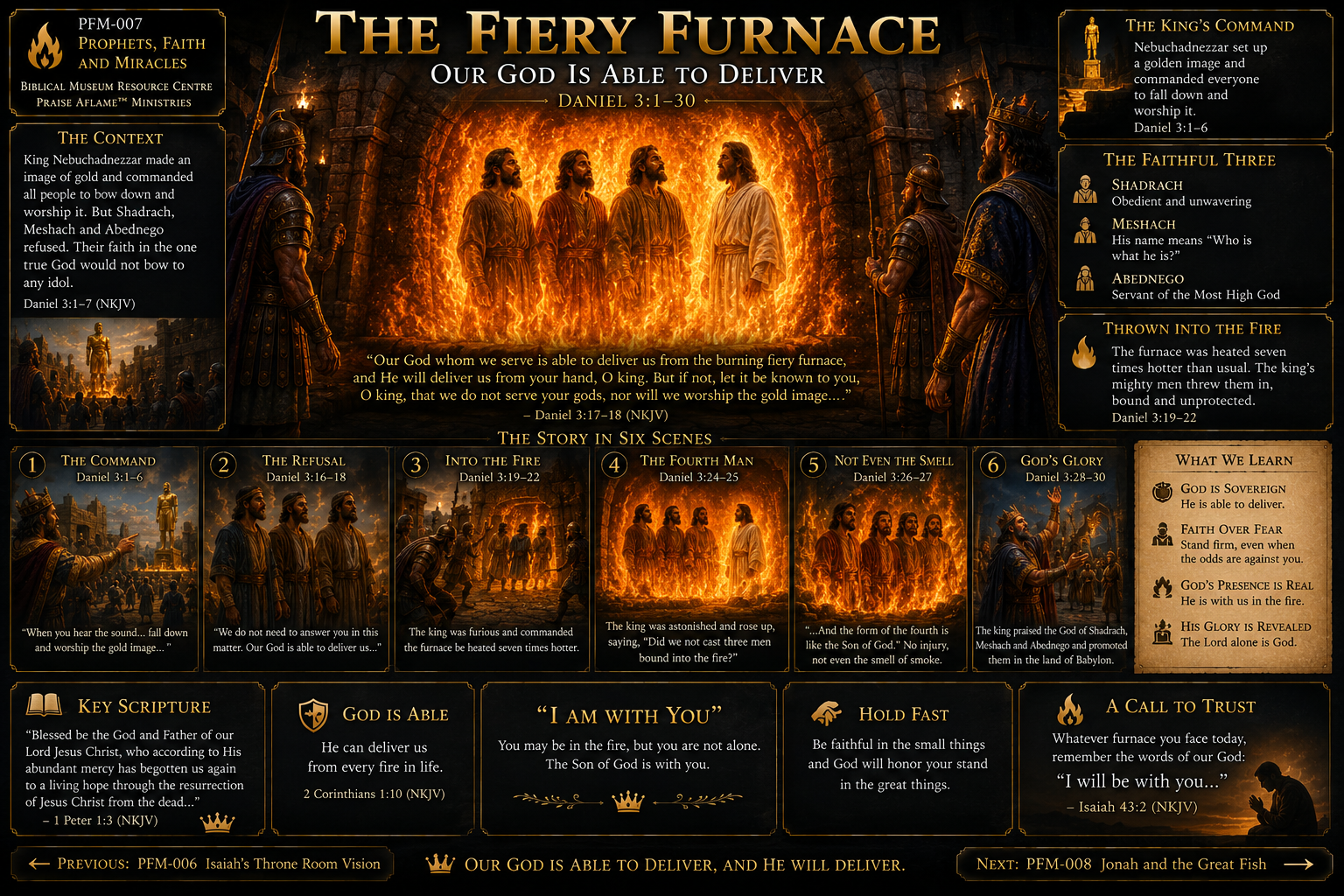
The crisis was one of enforced worship. Nebuchadnezzar's command required public allegiance to the image he had erected, placing the three Hebrews in direct conflict between royal authority and loyalty to God.
The king made a great image of gold and commanded everyone to fall down and worship when the instruments sounded. See Daniel 3:1–6.
Certain Chaldeans accused Shadrach, Meshach and Abed-Nego of refusing to serve the king's gods or worship the golden image. See Daniel 3:8–12.
Nebuchadnezzar gave them another opportunity to bow, warning that refusal would mean the burning fiery furnace. See Daniel 3:13–15.
They declared that God was able to deliver them, but even if He did not, they still would not serve the king's gods. See Daniel 3:16–18.
The king ordered it heated seven times hotter than usual. See Daniel 3:19.
Shadrach, Meshach and Abed-Nego were bound and thrown into the furnace. See Daniel 3:20–21.
The furnace was so hot that the men who threw them in were killed by the flames. See Daniel 3:22.
Nebuchadnezzar saw four men loose and walking in the fire, and they were not hurt. See Daniel 3:24–25.
The fire had no power over them, their hair was not singed, their garments were unchanged, and the smell of fire was not on them. See Daniel 3:26–27.
Nebuchadnezzar blessed the God who had delivered His servants and promoted the three men. See Daniel 3:28–30.
Nebuchadnezzar knew exactly how many men had been thrown in. His shock came because he now saw four walking freely in the furnace.
Daniel 3 records the king describing the fourth figure in extraordinary terms. The central point is clear: the three faithful men were not abandoned in the fire.
The officials observed that the fire had not harmed their bodies or even left its smell on them.
The same king who demanded worship of his image ended the episode praising the God who delivered His servants.
Their faith was not based on a guarantee that God would remove every trial. They believed God was able to deliver, yet their obedience did not depend on receiving the outcome they wanted. The words “But if not” reveal a faith that remained loyal even when the cost could have been their lives.