Powerful, Honored — Yet Leprous
Naaman was commander of the army of the king of Syria. He was a great and honorable man and a mighty man of valor, but he was a leper. See 2 Kings 5:1.
Prophets, Faith and Miracles • Exhibit 5 of 8
Naaman was a powerful commander in the Syrian army, respected by his king and successful in battle, yet he suffered from leprosy. His journey toward healing began through the simple testimony of a young Israelite servant girl, continued through a humbling encounter with Elisha, and reached its turning point when Naaman finally obeyed the prophet's instruction to wash seven times in the Jordan River.
Featured Museum Artwork
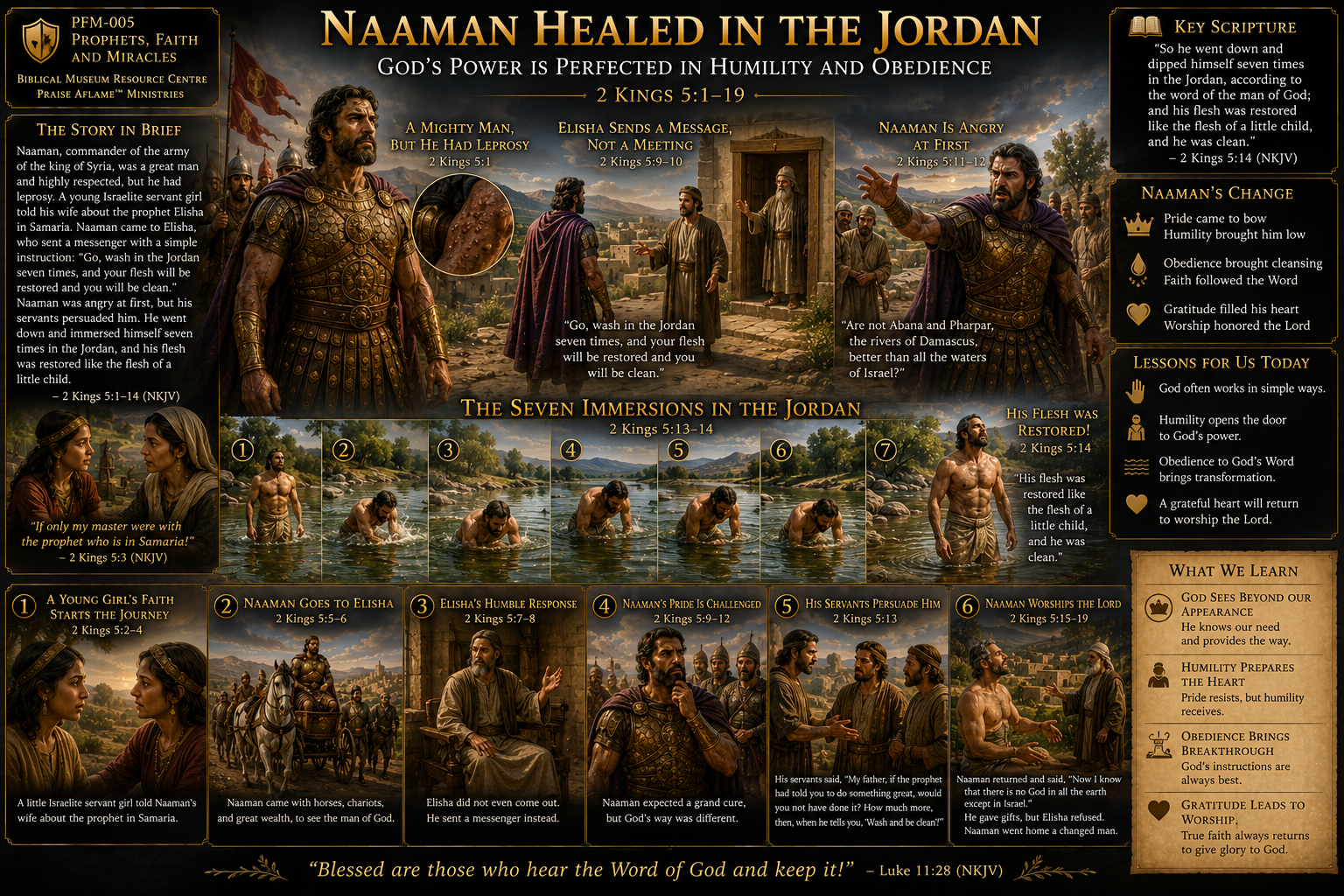
One of the most remarkable features of the story is that Naaman's path to healing began not with a king or military leader, but with the testimony of a young Israelite girl who had been taken captive and was serving Naaman's wife.
Naaman was commander of the army of the king of Syria. He was a great and honorable man and a mighty man of valor, but he was a leper. See 2 Kings 5:1.
A young Israelite girl told Naaman's wife that the prophet in Samaria could heal her master. Her simple testimony became the first step in Naaman's journey. See 2 Kings 5:2–3.
The king of Syria sent Naaman with a letter to the king of Israel, along with silver, gold and clothing. Elisha heard what had happened and asked that Naaman be sent to him. See 2 Kings 5:4–8.
Elisha sent a messenger telling Naaman to wash seven times in the Jordan, promising that his flesh would be restored and he would be clean. See 2 Kings 5:9–10.
Naaman expected Elisha to come out, call on the LORD and perform a dramatic healing. See 2 Kings 5:11.
Naaman argued that the rivers of Damascus were better than the waters of Israel and turned away in anger. See 2 Kings 5:12.
His servants asked whether he would have obeyed if the prophet had commanded some great thing. See 2 Kings 5:13.
Naaman humbled himself and entered the Jordan, choosing obedience over pride.
He dipped himself seven times according to the word of the man of God.
After the seventh immersion, Naaman's flesh was restored like the flesh of a little child, and he was clean. See 2 Kings 5:14.
Naaman returned to Elisha and confessed that he now knew there was no God in all the earth except in Israel. See 2 Kings 5:15.
Naaman wanted Elisha to accept a gift, but Elisha refused. The miracle could not be purchased, and the glory belonged to God. See 2 Kings 5:15–16.
Naaman declared that he would no longer offer burnt offerings and sacrifices to other gods, but to the LORD. See 2 Kings 5:17.
After Naaman explained the difficult situation he would face when accompanying his master into the temple of Rimmon, Elisha told him, “Go in peace.” See 2 Kings 5:18–19.
Naaman arrived with rank, wealth, horses, chariots and expectations, but none of those things could produce the healing he needed. The turning point came when pride gave way to humility and he obeyed the simple word he had been given. His healing became more than physical restoration: it led him to acknowledge the LORD as the true God.