The Family Journey Begins
Terah took Abram, Sarai and Lot from Ur of the Chaldeans toward Canaan. They came to Haran and lived there. See Genesis 11:27–32.
Genesis Collection • Exhibit 5 of 8
The Genesis narrative now focuses on one man and an extraordinary promise. God called Abram to leave his country, family and father's house and journey to a land that God would show him. Through Abram, God declared that a great nation would arise and that all the families of the earth would be blessed.
Featured Museum Artwork
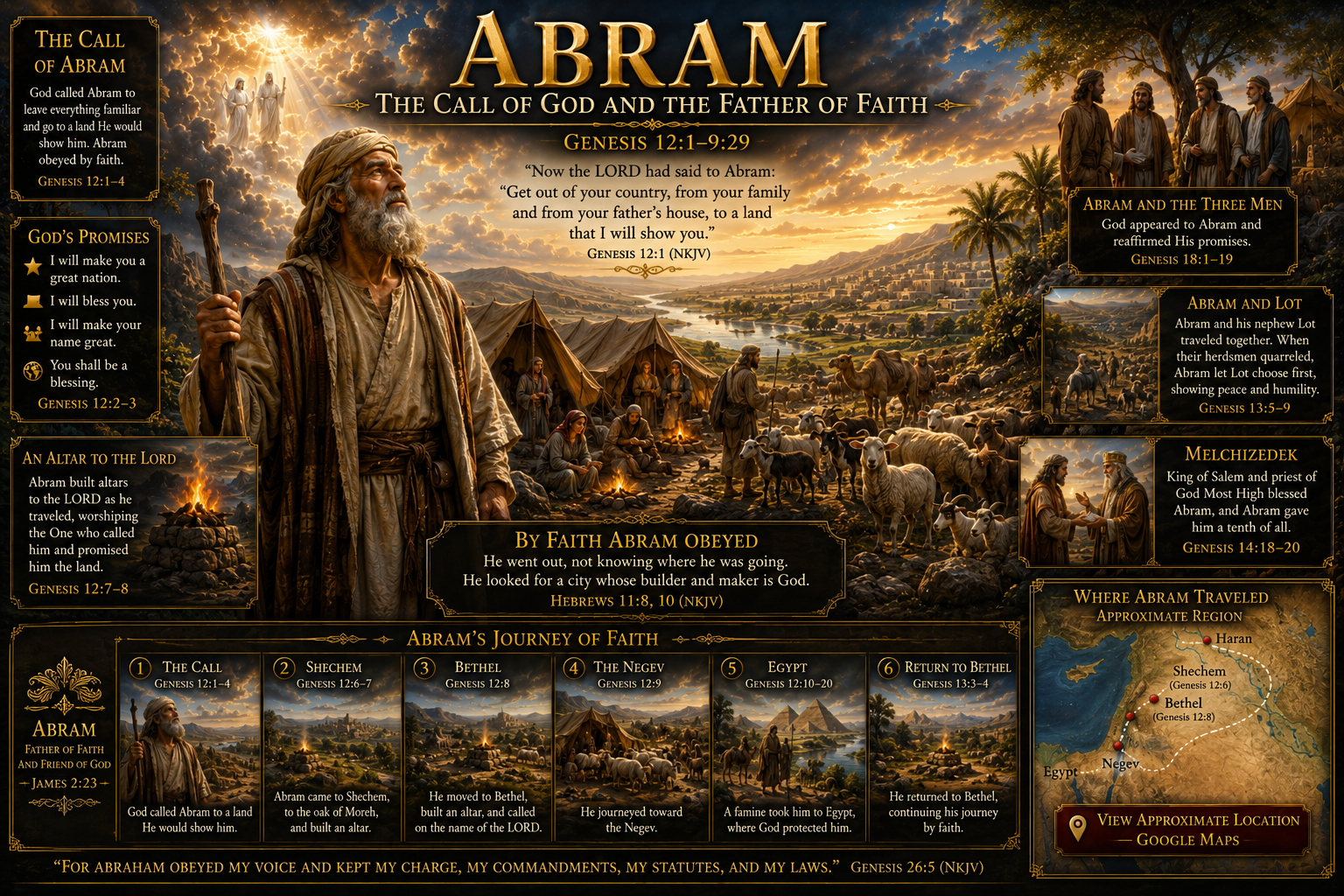
Abram's story begins earlier with his family leaving Ur of the Chaldeans and traveling toward Canaan, stopping at Haran. After Terah's death, the LORD's call to Abram becomes the great turning point of Genesis 12.
Abram's life is not presented as one isolated event. Genesis follows a long journey of calling, movement, altars, promises, conflict, rescue, covenant, waiting and faith. His name remains Abram until Genesis 17, when God renames him Abraham.
Terah took Abram, Sarai and Lot from Ur of the Chaldeans toward Canaan. They came to Haran and lived there. See Genesis 11:27–32.
Abram was seventy-five years old when he departed from Haran. Sarai and Lot traveled with him, together with their possessions and people acquired in Haran. See Genesis 12:4–5.
At the terebinth tree of Moreh near Shechem, the LORD appeared to Abram and promised the land to his descendants. Abram built an altar there. See Genesis 12:6–7.
Abram moved to the mountain east of Bethel, pitched his tent between Bethel and Ai, built an altar and called on the name of the LORD. See Genesis 12:8.
A severe famine caused Abram to go down to Egypt. Genesis records the difficult episode involving Sarai and Pharaoh before Abram returned from Egypt. See Genesis 12:10–20; 13:1.
Because their possessions were great, Abram and Lot separated. Lot chose the Jordan plain while Abram remained in Canaan. God then renewed His promise concerning the land and Abram's descendants. See Genesis 13.
Abram moved his tent and lived by the terebinth trees of Mamre in Hebron, where he built another altar to the LORD. See Genesis 13:18.
When Lot was captured during a regional war, Abram armed 318 trained servants born in his house, pursued the captors and rescued Lot and the possessions. See Genesis 14:1–16.
Melchizedek brought out bread and wine and blessed Abram. Abram gave him a tenth of all. See Genesis 14:18–20.
God told Abram to look toward heaven and count the stars if he could, declaring that his descendants would be likewise. Abram believed the LORD, and it was accounted to him for righteousness. See Genesis 15:1–6.
Genesis 15 records a formal covenant concerning Abram's descendants and the land, along with the prophecy that his descendants would experience affliction before returning. See Genesis 15:7–21.
Sarai gave Hagar her Egyptian maid to Abram, and Hagar bore Ishmael. Abram was eighty-six years old when Ishmael was born. See Genesis 16.
When Abram was ninety-nine, God appeared to him and changed his name from Abram to Abraham, declaring that he would be a father of many nations. Sarai's name was also changed to Sarah. See Genesis 17:1–16.
God declared that Sarah would bear Abraham a son named Isaac and that His covenant would be established with Isaac and his descendants. See Genesis 17:15–21.
With Abram, Genesis begins the patriarchal story that will lead through Isaac, Jacob and the twelve sons of Israel. Abram responds to God's call by leaving what is familiar and traveling toward God's promise. His story also demonstrates that faith is lived over time: through movement, waiting, mistakes, renewed promises and continued encounters with God.
Continue the Genesis Collection
The promise now moves to the son whom Sarah would bear: Isaac, the covenant son through whom God said His covenant would continue.