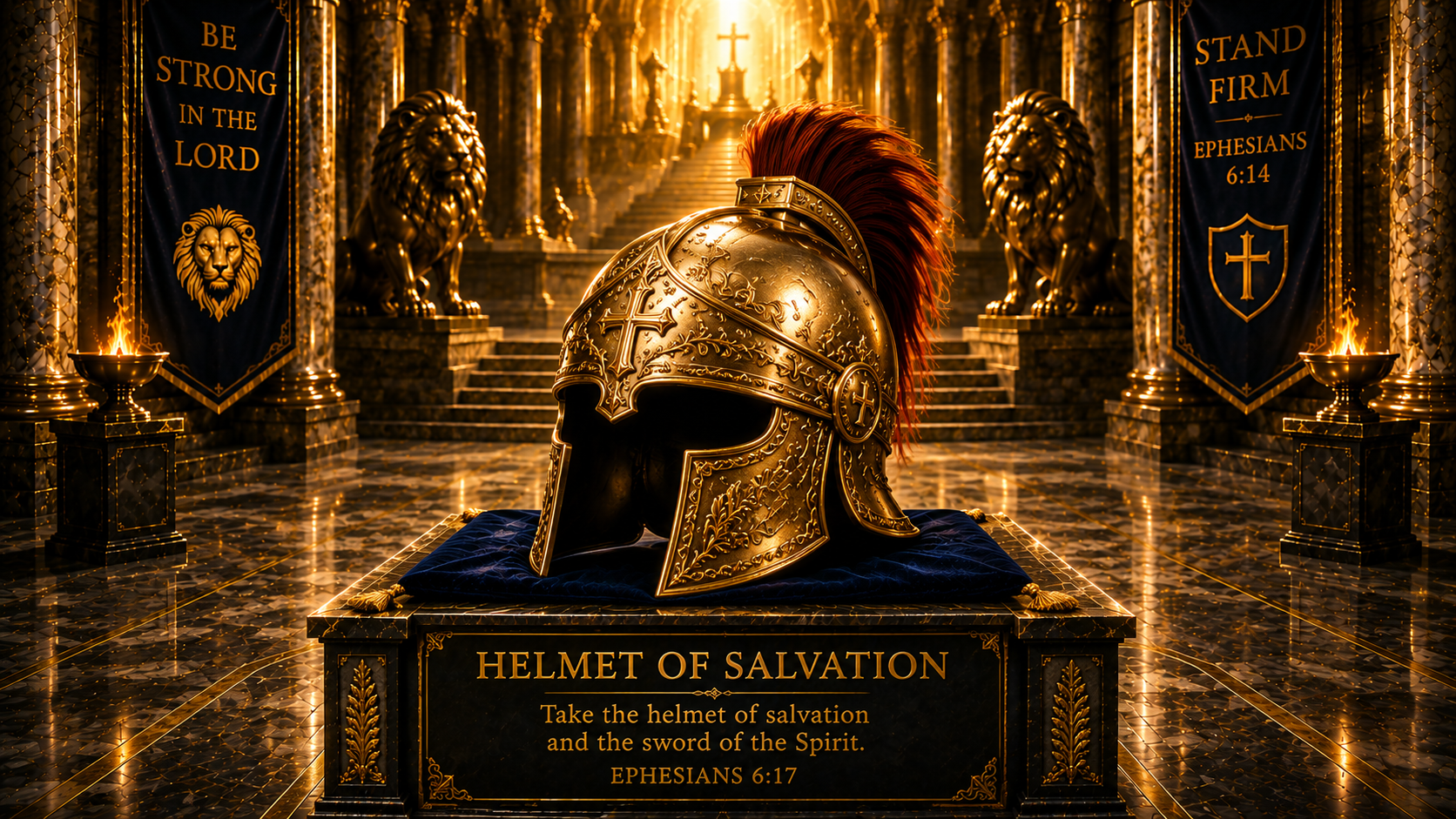
1. The Historical Metaphor: The Roman Helmet
A Roman soldier could be well protected across the body and still be defeated by a blow to the head. The helmet existed to protect the command centre of the soldier's body: the head, face, and senses.
The Construction: Roman helmets varied by period and unit, but they were built to protect the skull while using cheek pieces, neck guards, and reinforced metal to reduce the danger of blows from multiple directions.
The Purpose: A soldier who could no longer think clearly, see properly, or remain conscious could not continue the fight. Protection of the head was protection of the soldier's ability to function.
Paul turns that image toward salvation because spiritual conflict frequently attempts to invade the believer's thinking.
2. Salvation Protects Identity
Ephesians 6:17 NKJV
Salvation is not merely a future destination. Through Jesus Christ, the believer has been forgiven, reconciled to God, brought into a new relationship with Him, and given a new identity.
3. The Battle for the Mind
Many spiritual battles begin as thoughts before they become actions. If a lie is entertained long enough, it can begin shaping emotion, expectation, and behaviour.
Condemnation: “You are beyond forgiveness.”
Fear: “The worst possible outcome is inevitable.”
Confusion: “You cannot know what is true.”
Hopelessness: “Nothing will ever change.”
Identity attack: “Your failure, wound, or past is who you really are.”
The helmet of salvation brings the mind back to the Gospel. Jesus saves. Jesus restores. Jesus intercedes. Jesus gives hope that reaches beyond the present moment.
4. The Hope of Salvation
Paul also connects the helmet with the hope of salvation in 1 Thessalonians 5:8. Hope matters because believers live between what Christ has already accomplished and the full completion of what God has promised.
The present battle is not the whole story. A difficult season is not the final chapter. The helmet protects the believer from allowing temporary circumstances to rewrite eternal truth.
Hope looks backward: Christ has already acted.
Hope stands in the present: Christ is with His people now.
Hope looks forward: God will complete what He has promised.
5. Putting On the Helmet Today
- Examine the thought: Does it agree with the character and Word of God?
- Separate conviction from condemnation: Conviction leads toward repentance and restoration; condemnation says there is no hope.
- Replace the lie: Do not only reject destructive thinking. Answer it with truth.
- Guard the input: Pay attention to what repeatedly feeds your imagination, fear, anger, or despair.
- Remember your hope: The present moment is not the whole story.
6. Reflection and Prayer
Ask yourself: What thought has been attacking my identity, assurance, or hope? What truth about salvation needs to become louder in my mind?
Lord Jesus, thank You for salvation. Guard my mind from condemnation, fear, confusion, and despair. Remind me who I am in You. Renew my thinking through Your truth, strengthen my hope, and help me reject every thought that pulls me away from Your grace and Your purposes. Amen.