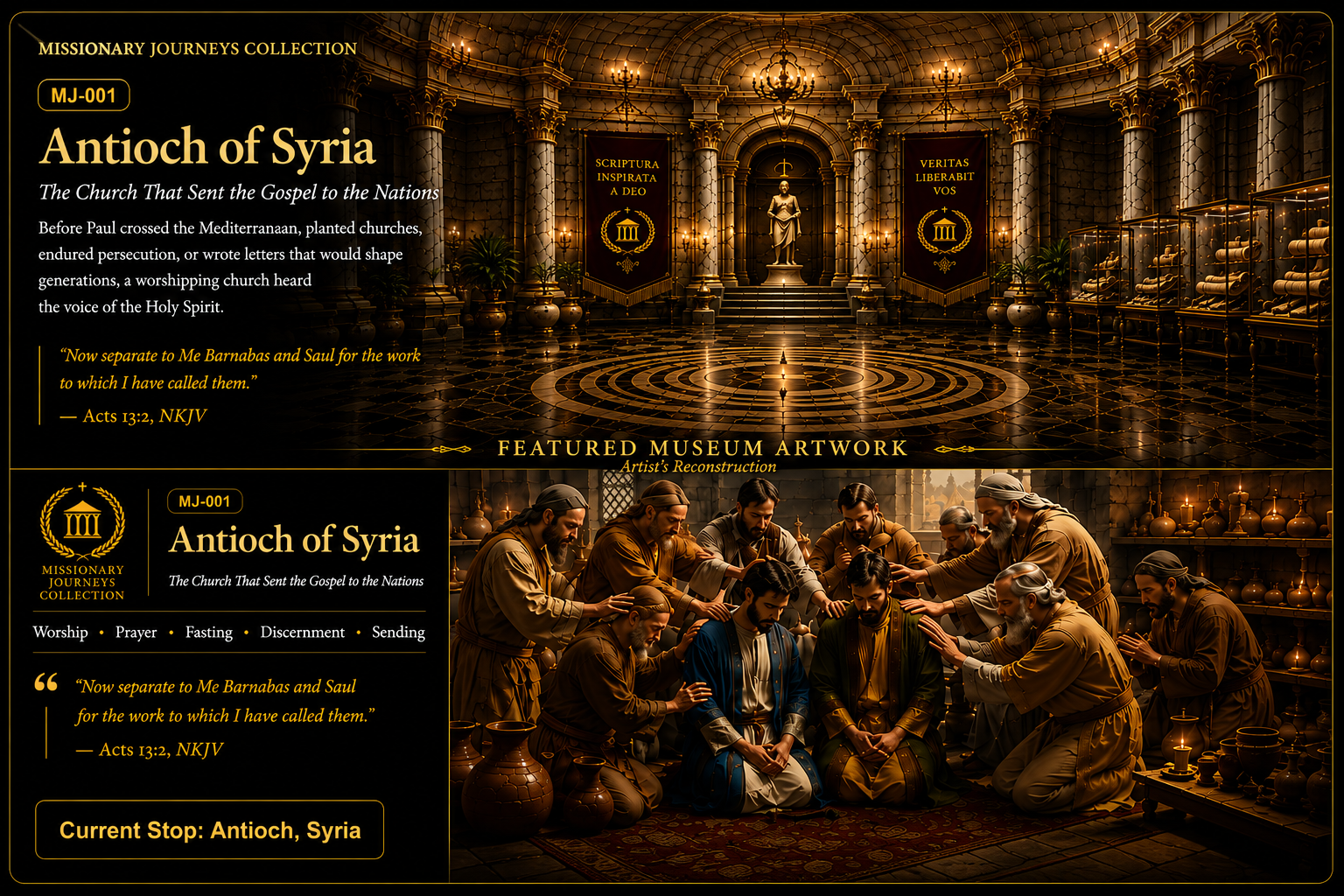
Missionary Journeys Collection Exhibit 1 of 10

Missionary Journeys Collection

MJ-001

Antioch of Syria

The Church That Sent the Gospel to the Nations

“Now separate to Me Barnabas and Saul for the work to which I have called them.” — Acts 13:2, NKJV

Welcome to the Exhibit

Where Mission Was Born From Worship

The first missionary journey did not begin with a travel plan, a committee meeting, or a human strategy. It began while believers in Antioch ministered to the Lord, fasted, prayed, and listened for the direction of the Holy Spirit.

Antioch became the launching point from which Barnabas and Saul would step beyond familiar ground and begin carrying the gospel through the Roman world.

Journey Orientation

Where Are We in Paul's Journey?

Journey Orientation - Antioch

The Praise Aflame™ Biblical Museum & Resource Centre

Missionary Journeys Permanent Collection

The Commissioning at Antioch

Acts 13:1–3

Exhibit MJ-001
Approximate Date Mid-First Century AD
Ancient Location Antioch, Syria
Modern Location Antakya, Türkiye

Historical Significance: This moment marks the formal beginning of Paul’s First Missionary Journey and one of the earliest organized missionary outreaches recorded in Acts.
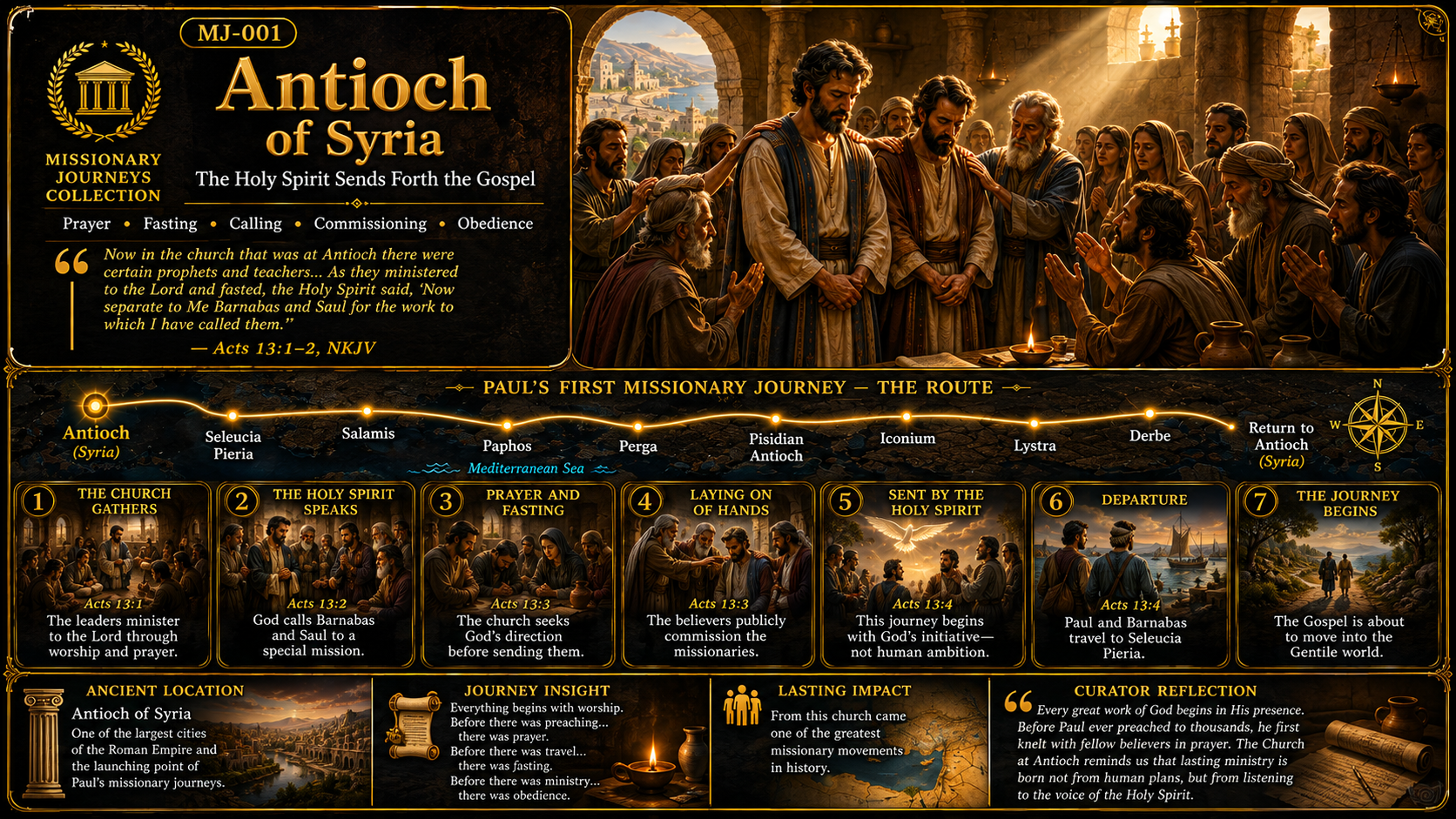
The Biblical Record

Acts 13:1–3

“Now in the church that was at Antioch there were certain prophets and teachers: Barnabas, Simeon who was called Niger, Lucius of Cyrene, Manaen who had been brought up with Herod the tetrarch, and Saul.

As they ministered to the Lord and fasted, the Holy Spirit said, ‘Now separate to Me Barnabas and Saul for the work to which I have called them.’

Then, having fasted and prayed, and laid hands on them, they sent them away.”

Acts 13:1–3, NKJV

Historical Background

Why Antioch Mattered

A Strategic City

Antioch was the capital of Roman Syria and one of the major cities of the eastern Roman world. Trade routes, cultures, languages, and peoples converged there, making the city an important bridge between the Mediterranean and lands farther east.

That international character made Antioch an extraordinary place from which the gospel could move beyond one cultural setting and reach the nations.

A Church Prepared to Send

Acts 11 records that the disciples were first called Christians in Antioch. Barnabas later brought Saul there, and together they taught the church.

By Acts 13, Antioch had become a worshipping, fasting, praying, listening church. Mission emerged from a community already devoted to the presence and purposes of God.

Archaeologist’s Note

Much of ancient Antioch lies beneath and around modern Antakya, but surviving remains and museum collections still provide important glimpses into the urban world known by the early church.

  • Roman mosaics and decorative art
  • Remains of roads and water systems
  • Fortifications and evidence of large-scale urban life
  • Artifacts reflecting the city’s multicultural population

Archaeology helps illuminate the historical setting; Scripture remains the primary source for the commissioning event portrayed in this exhibit.

Explore Antioch Today

Modern Antakya lies in Hatay Province, Türkiye. Exploring the region helps visitors understand Antioch’s strategic relationship to Syria, Asia Minor, and the nearby Mediterranean coast.

Modern City
Antakya
Province
Hatay
Country
Türkiye
Journey Role
Missionary commissioning centre
View Antakya on Google Maps

Did You Know?

Four Details That Shape the Story

01

Christians at Antioch

Acts 11:26 identifies Antioch as the place where the disciples were first called Christians.

02

Diverse Leadership

Acts 13 names prophets and teachers from varied backgrounds, reflecting the international character of the church.

03

The Holy Spirit Directed

Barnabas and Saul were set apart in response to the Holy Spirit’s call, not merely because of human ambition.

04

The Church Released Them

After further fasting and prayer, the church laid hands on them and sent them into the work.

Curator’s Reflection

Worship Before Mission

Before Paul boarded a ship, preached in synagogues, confronted opposition, planted churches, or wrote letters that would become part of the New Testament, there was a church gathered before the Lord.

Acts 13 reveals that one of history’s great missionary movements was born in worship, fasting, prayer, and responsiveness to the Holy Spirit.

Mission flowed from worship.

The church did not invent the mission. The Holy Spirit initiated it. That pattern still speaks today.

— Praise Aflame™ Biblical Museum & Resource Centre

Life Application

Preparation Is Never Wasted

God often prepares His servants quietly before He sends them publicly. Paul’s years of learning, serving, and growing remind us that unseen seasons can become the foundation for future obedience.

Consider: Are you willing to minister to the Lord faithfully before knowing exactly where He may send you?

Continue the Journey

Next Destination: Seleucia Pieria

Paul and Barnabas now leave Antioch and travel toward the Mediterranean coast. At Seleucia Pieria, the mission moves from commissioning to action.

Before You Continue...

What Have You Received?

Every exhibit is designed to encourage you to return to Scripture with greater understanding, deeper confidence, and renewed wonder.

Pause and Reflect: What truth did you discover? What strengthened your faith? What will you carry with you?

Continue Your Journey

You have now completed Exhibit MJ-001 — The Commissioning at Antioch.

Ahead lies Seleucia Pieria, the harbor where faith became action as Paul and Barnabas sailed toward Cyprus.

“Open my eyes, that I may see wondrous things from Your law.”

Psalm 119:18 (NKJV)